
Share the post "Driving in Fog: Safety Rules and Tips for Safe Driving"
Last updated on January 16, 2026
Driving in fog is one of the most challenging situations for motorists. Severely reduced visibility, distorted distance perception, and sometimes wet or slippery roads all significantly increase the risk of accidents when fog sets in.
According to Road Safety, poor visibility is an aggravating factor in many accidents, particularly on roads and highways. Adapter sa conduite, utiliser correctement son éclairage et préparer son véhicule sont donc essentiels pour circuler en toute sécurité par temps de brouillard.
In this article, discover the rules to follow, the right habits to adopt, and practical advice for driving in fog—including freezing fog.
Too long? Here are the key points!
- Fog lights improve visibility when standard headlights become ineffective.
- Rear fog lights should only be used when visibility is below 50 meters.
- In fog, significantly reduce your speed and increase following distance.
- Freezing fog makes roads extremely slippery, especially on bridges and shaded areas.
- Smooth, anticipatory driving without sudden maneuvers reduces accident risk.
- Clean windows, lights, and wipers are essential to see and be seen.
- Winter windshield washer fluid improves visibility without the risk of freezing.
Using Fog Lights Properly
Why Are Fog Lights Essential?
Fog lights are designed to improve visibility when fog drastically reduces the range of standard headlights. Mounted lower on the vehicle, they illuminate the road surface without excessive reflection on fog particles.
They help to:
- better distinguish road markings,
- anticipate nearby obstacles,
- stay properly positioned within the lane.
For example, when driving on a highway in dense fog, fog lights help drivers see vehicles ahead more clearly and stay safely in their lane.
How to Recognize Front and Rear Fog Light Symbols?
Fog lights are easily identified by specific symbols displayed on the dashboard. Knowing how to recognize them ensures you use the right lights at the right time, especially when driving in foggy conditions.
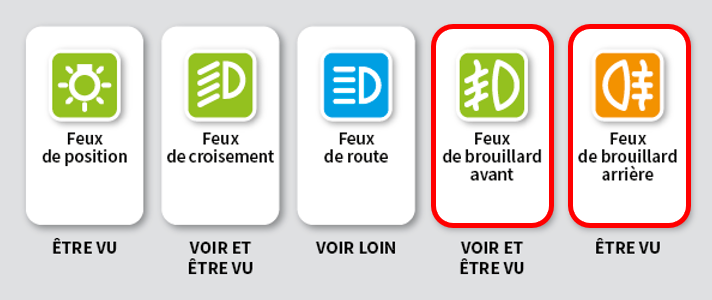
Rear Fog Lights: Use with Caution
To remain visible to other drivers, remember to turn on your rear fog lights when necessary. Rear fog lights make your vehicle more visible to drivers behind you and are particularly useful when visibility drops below 50 meters.
Warning: Rear fog lights are very powerful and must be switched off as soon as visibility improves, otherwise they may dazzle other road users and create additional danger.
Adapting Your Driving in Fog
Reduce Speed
In foggy conditions, reducing speed is a fundamental rule. Driving at an adapted speed allows you to:
- increase reaction time,
- avoid sudden braking,
- better anticipate obstacles or traffic slowdowns,
- reduce accident risk by giving other drivers more time to see and react.
On highways, when visibility is below 50 meters, the maximum permitted speed is often reduced to 50 km/h, depending on regulations.
Increase Following Distance
Following distance should be significantly greater than in clear weather. Fog distorts distance perception and can hide sudden slowdowns. A good rule of thumb is to double your usual following distance.
By adopting these simple preventive measures when driving in fog, you help improve road safety while protecting your own life and that of others.
Driving in Freezing Fog
Extremely Slippery Roads
Freezing fog forms when moisture settles on a cold road surface, creating a thin, invisible layer of ice. It can make roads extremely slippery, especially in cold conditions.
Drivers must pay close attention to warning signs indicating the risk of ice and reduce speed when approaching these areas.
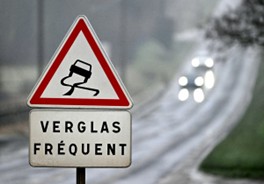
It is crucial to use tires that are suitable for winter driving to ensure better traction on roads in freezing fog conditions. These tires are designed with a special compound that remains flexible even in cold weather, ensuring better traction on icy or snowy surfaces.
Reduce Speed and Exercise Extra Caution
In freezing fog conditions:
- significantly reduce your speed,
- avoid sudden acceleration or braking,
- anticipate every maneuver.
When driving in freezing fog, it is essential to reduce your speed even further than normal. Due to the difficult weather conditions, you need to be particularly vigilant on bridges and in shaded areas. These areas tend to freeze faster than the rest of the road, increasing the risk of skidding.
Vigilance and Patience: Keys to Driving in Fog
Concentration and Anticipation
Regardless of the weather, driving requires full attention. Foggy conditions demand maximum concentration. It is essential to:
- avoid all distractions,
- closely observe road signs and markings,
- anticipate traffic slowdowns caused by fog.
Patience and Tolerance
In foggy weather, all drivers face the same difficulties. Staying calm, avoiding unnecessary overtaking, and adopting smooth driving behavior contribute to overall road safety.
Preparing and Maintaining Your Vehicle for Foggy Conditions
Regularly Clean Windows and Lights
Clean windows and clear headlights significantly improve visibility. Dirt, fog, or greasy film increase glare, especially at night or in foggy conditions.
Regular cleaning of both interior and exterior windows is essential. Using a dedicated car glass cleaner helps effectively remove stubborn residues from headlights and taillights.
Check Windshield Wipers
Worn wiper blades leave streaks and reduce visibility. They should be replaced as soon as streaks or poorly wiped areas appear.
It is therefore recommended that you replace your wiper blades regularly according to the manufacturer’s recommended lifespan. For example, some models need to be changed every 6 months to 1 year to ensure optimal performance. Also make sure that your wipers are compatible with all weather conditions.
Use Winter Windshield Washer Fluid
A winter windshield washer effectively cleans the windshield without risk of blocking the system and helps to defrost the windshield. It is recommended to check the tank level regularly, especially during winter.
Aloha windshield washer boosters allow you to add a specific function to an existing windshield washer system. For example, the Aloha Lapland Vacation booster allows you to add a de-icing function to your existing windshield washer system so that you don’t have to replace the entire system when the first frosts arrive.
Conclusion
Driving in fog requires anticipation, caution, and preparation. By adapting your speed, using fog lights correctly, and maintaining sufficient following distance, you significantly reduce risks.
Driving in fog requires anticipation, caution, and preparation. By adapting your speed, using fog lights correctly, and maintaining sufficient following distance, you significantly reduce risks.
Frequently Asked Questions About Driving in Fog
Should high beams be used in fog?
No. High beams reflect light off fog particles and reduce visibility.
What speed should you drive in dense fog?
When visibility drops below 50 meters, speed should be significantly reduced—often to 50 km/h, depending on regulations.
Why is freezing fog dangerous?
It creates a thin, invisible layer of ice, making the road extremely slippery, especially on bridges.


